Monday, December 19, 2016

The Five Star Movement and the Potential for Real Change

                    
In Italy the populist Five-Star movement (M5S) may potentially win the next election and form a government. Pundits and markets are alarmed at the potential victory of M5S because its leadership has promised a referendum on the euro, the common currency which many Italians regret and might very well vote to leave if given the option. According to the professional doomsayers, Italy’s leaving the common currency would lead to uncontrolled and cascading financial crises and would represent an existential threat to the European Union.

However, the dynamics are much more nuanced than pundits assume, and this should council skepticism towards their apocalyptic predictions on the potential consequences of a populist victory in Italy.

First, any referendum on the euro would be consultative, not abrogative, because the Italian constitution forbids the abrogation of international agreements via referendums.
Second, M5S are not opposed to the euro per se, rather they object to the current set-up which ensures the continuation of austerity policies which have socially devastated Italy and other periphery Eurozone countries. In addition, the M5S recognizes that the common currency needs a political union to be sustainable. Hence they are demanding changes to the currency to make it work, changes that accord with the suggestions of the IMF, the European Central Bank, and numerous reputable think-tanks.

The purpose of a referendum on the euro, then, would be to send a signal to the country’s representatives and Italy’s European partners about how the majority feels about the currency, and this would occur after attempts to finally fix it. If the efforts to resolve the euro’s problems succeed, a majority of Italians would likely vote in favour of preserving the common currency.

This is actually an excellent strategy because Eurozone leaders have been complacent about fixing the structural flaws of the euro. After the debacle with Greece in the summer of 2015, French and German leaders presented proposals to create a banking union and centralized political institutions to underwrite the euro and to help correct the imbalances that led to the crisis. These proposals were soon forgotten, however, and hence the euro remains vulnerable and continues to disadvantage periphery countries like Italy. The threat of a referendum, even a consultative one, might just be what French and German officials need to spur them to action.

Of course, this raises the question of what might occur if this strategy of pressuring Europe’s core fails and, when a referendum on the euro proceeds, the majority of Italians vote to leave. In this scenario, given that the referendum would not be abrogative, the elected representatives of the country would have the final say on whether to officially leave the currency. If they did, a financial crisis and the end of the EU would not be inevitable. That would depend on the way the process is managed. Policies to mitigate the harmful effects of the transition would include temporary capital controls, a commitment to stay in the EU while leaving the euro, and a reserve fund to pay for essential imports.

A victory for the Five Star Movement in the next election could set in motion one of the scenarios sketched above. Either way, they would be doing Italy and Europe a favour. The threat of a referendum on the euro might spur Europe’s leaders to take action and finally fix the flaws of the currency, helping to put Europe on a more secure financial footing. If this threat fails, the referendum proceeds and a majority of Italians vote to leave the euro, they will be expressing their democratic right to leave a system that has caused them much financial, social, and political difficulty.


Tuesday, December 6, 2016

Arlie Hochschild's "Feeling Rules" and International Hierarchy


Our subjective worlds often have a taken-for-granted feeling in the sense that they are perceived to be natural, right, normal, and essential. Emotional patterns, impressions of the external world, perceptions of our relationships, and the opinions that form from these processes often feel like they emerge from inside of us. Sociologists have long recognized that broader macro-structural factors, such as markets, politics, and institutions, impact our internal worlds whether or not agents recognize it.  

This insight on the link between macro-structure and internal subjectivity has interested me for the past year. I began thinking about it because of a puzzle I encountered in my investigations of the politics of the euro. One of my discoveries in the course of that research was that perceptions of inter-state hierarchy correlated with support for Europe generally and the euro specifically. Persons in Southern European countries who believed their country was “inferior” in some fundamental way (e.g. the quality of citizens, institutions, etc) to other countries were more likely to support Europe (often because they saw it as the solution to their country’s perceived defects). I documented these perceptions in my book Eurozone Politics, and in one of the chapters I elaborate by distinguishing between perceived and objective inter-state hierarchy. The former has been mentioned, and the latter refers to those objective and measurable variables that determine a nation-state’s place on the pecking order, such as population, military assets, and economic size + performance. In the same chapter I argue that, in Europe’s inter-state pecking order, the last on the list matters relatively more: it is economic size + performance that helps to explain Germany’s dominance despite its military weakness (in contrast, regions characterized with intense hostility, like the Middle East, are more likely to be hierarchically organized around military capacity).


From this argument on hierarchy a question was identified: why is economic performance part of the equation? I think I may have found a partial answer in the work of sociologist Arlie Hochschild. She is not an expert on European or international politics, but her insights may be relevant to those realms. In this post I will try to elaborate on how, but first it is necessary to explore Hochschild’s ideas within the context of her discipline, sociology.


Her main contribution is that a culture’s “feeling rules” rather than internal subjective processes determine how we actually feel. She deftly uses two metaphors to illuminate the mechanisms: “dictionary” and “bible”. The first refers to the labels we give to emotions, which influence the demarcation of emotional states. It is not clear, for example, that, at least physiologically, there is much difference between, say, contempt and hate, but the different labels have implications for how they are experienced and communicated. In addition, the fact that we typically label these emotions “negative” impacts how they are felt. The second metaphor, “bible”, refers to the normative assumptions that surround emotional expression, which is another way of saying the culturally determined rules that influence the kinds of emotional reactions that are publicly allowed or prohibited. To use an example I am familiar with as a bi-cultural Italian-Canadian, in Southern Italy, open displays of “negative” emotions like grief or anger are more likely to be perceived as normal than, say, in English Canada, where the Anglo-Saxon tradition of emotional reservedness frowns upon such displays. Hochschild’s theory sheds light on how neither rule or modality is “natural” even though humans in both cultures share the same physiology. Rather--whether the persons are aware of this or not--their emotional lives are strongly influenced by the labels (dictionary) and normative values (bible) that are unique to individual cultures.


In other work Hochschild applies the framework of “feeling rules” to the realm of romantic relationships. Specifically, she asks how the structures of capitalism create rules that influence our emotions vis-à-vis dating, sex, and marriage. Her conclusions are that the shift to neo-liberal capitalism, defined as the increase in short-termism—contract work, capital mobility, rapid technological change, etc.—has impacted our “emotional investment” strategies in the realm of romance, which are now also increasingly determined by the logic of short-termism and mobility. As capital becomes mobile and short-term, romantic commitments become similar as persons shift from partner to partner, looking for the highest return, avoiding highly risky long-term commitments. In a similar vein, the de-regulation of capital and markets lead to a kind of de-regulation of romantic life, where the freedom to maximize value (profits in the market, pleasure in romance) replaces a regulatory regime that constrains freedom for some greater good that is not immediately perceived. The short-termism and non-committal hook-up culture, for example, may be the mirror, or even the consequence, of the short-termism of neo-liberal capitalist relations. 


Hochschild’s argument is compelling. Previous forms of economic organization were undoubtedly associated with different emotional relationships. More stable economic systems, from feudalism to the mature industrial economies of the post-war era in the West, were also characterized by more stable emotional investments in sexual relations. Thus there certainly is a strong correlation, but I can think of two critiques of the theory. The first is that correlation is not necessarily causation, which suggests other possibilities. It may be that emotional relations are the cause, not consequence, of economic organization, or it could be that a third and unidentified variable is causing both the distinct emotional patterns and economic organization. The second criticism is that, even if we accept Hochschild’s thesis, it leaves unexplained the fact that not all emotional investments are short-term; currently perhaps half of romantic relationships are stable and permanent (in fact, marriage retention rates are increasing, but at the higher income ladder). These couples presumably face the same economic pressures as everyone else, and yet they have formed durable partnerships. Why? Hochschild’s response might be that not all actors react in the same way to a system’s feeling rules, and few arguments can withstand such a high test. To be valid, we would need to show that actors are more likely to act in a certain way, not that all of them will. Lastly, other variables or feeling rules, like religious ones, may, in some cases, override the short-termism that inheres in romantic relationships under neo-liberal capitalism.


Although Hochschild’s conclusions can be critiqued on many grounds, it remains the case that she was on to something when she recognized that our economic structure enters our consciousness and impacts our emotions and perceptions. And this is the insight that I’d like to apply to the puzzle mentioned above, i.e., about the constitution of inter-state hierarchy. Accordingly, following Hochschild, I’d like to advance two arguments: 1) capitalism’s emphasis on performance for profit-maximization enters our consciousness so that we confer status and prestige to performance in political life, including the realm of inter-state hierarchy, and 2) those who reach the top of the pecking order are able to confer status to those on the lower end. In this model, then, the constitution and reproduction of hierarchy has two stages: the capitalist criterion of performance enters our consciousness in a way that impacts our perceptions of the external world, so that we confer value to groups that seem to perform in the market better than others; those who reach the top are, through acts of volition or omission, able to confer value and status to secondary states on the pecking order.


I will try to apply this concretely to Europe. The hierarchical system on that continent is characterized with Germany at the apex, France and the UK just below, or secondary, and Italy even lower, perhaps just slightly above Spain and Poland but undoubtedly below the secondary level. The evidence for this system can be seen whenever a major decision has to be made: Germany usually has the final say. What is more, whenever there is a global crisis, Berlin is usually the first to receive a phone call from world leaders. Curiously, this hierarchy is present even though the UK and France are militarily stronger than Germany. The reason is that war is no longer a real possibility in Europe. Other criteria are, in this context, more influential. Population, economic size + economic performance matter everywhere, but perhaps more in Western Europe. Needless to say, Germany scores highest here: its dynamic economy, based on high-value industrial goods, is the envy of the world. Germany’s dominant place on the hierarchy is ultimately reproduced by the subjective value we confer on performance, but although this value-ascription is subjective, it does not derive from inside of us. Rather, the source is the “bible”, or rules, of capitalism that value performance, which enter our consciousness and orient our perceptions of the external world, including the realm of inter-state politics. In the second stage, Germany, as leader, has the power to reproduce hierarchy by conferring value and status to those lower on the pecking order.


The implication is that economic systems impact, not only romantic and sexual relations, but also the organization and reproduction of political relations including international hierarchy. This may be demonstrated via a comparison with pre-capitalist economic forms, like feudalism, which operated on the basis of different rules that seeped into human consciousness and impacted the organization of hierarchy between political units. Under feudalism, other institutions, like religion and the military, mattered more than the market. Accordingly, virtues associated with them, like devotion, honour, sacrifice, bravery, courage, and chivalry, were more influential in determining value-ascription than the economic performance associated with capitalism.


Assuming this reasoning is valid, the next question is: so what? I can think of a few implications that are relevant. The first is theoretical. Realists argue that hierarchy is produced by objective factors like population, military, territory, and economy, while constructivists assert that it is constituted inter-subjectively. The argument of this piece, by honing in on one aspect of hierarchy (economic performance) suggests a middle way. Economic size, in so far as it reflects actual productive capacity and value creation, is objective. But the ascription of status and prestige to the criteria of performance is not an inevitable result. It rather is a consequence of the dominance of capitalist economic relations; the rules from this system enter our consciousness and orient our perceptions towards valuing economic performance more than, say, bravery. This qualifies the realist notion of the universality and objectivity of power by showing it’s socially constructed elements. But it does not completely confirm the constructivist position either insofar as economic relations are not completely reducible to inter-subjectivity.


Another implication is predictive. The shifts of political units on the hierarchy will probably mirror perceptions of their performance, or lack thereof. To continue the example above: Germany’s place at the top of Europe’s pecking order could collapse if, say, it experienced a severe recession that significantly damaged its banking system or industrial capacity. If this were to happen contemporaneously as France entered a period of rapid industrial, technological, and economic growth, the argument above predicts that their positions on the pecking order would reverse. In this scenario, Paris, not Berlin, would be the first capital to be called in the event of a crisis, and France, not Germany, would have the power to confer status and prestige to lower states, including Germany, by deciding to include or exclude them from major decisions. This would happen even though the military balance between them remained unchanged.


Another prediction is that, under capitalism, hierarchies will be less stable than in the past. Previous international hierarchies, like previous romantic commitments, were more durable, at least in part, because their economic systems and associated institutions were more stable. Contemporary capitalism is characterized by rapid shifts in technology and value creation that rapidly lead to the creation and destruction of entire industries. The fate of a nation’s place on the international hierarchy will be strongly influenced by these processes.


Wednesday, November 9, 2016

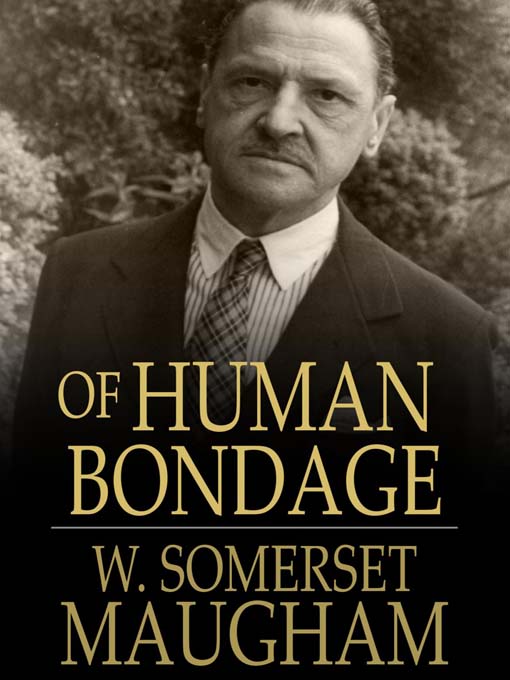
A few thoughts on W. Somerset Maugham's "Of Human Bondage"


With only one exception, all the members of my book-club (myself included) gave W. Somerset Maugham’s novel Of Human Bondage a very high rating, and for good reason. It is not an exaggeration to say that the book is a masterpiece: it conveys a compelling story that evokes powerful emotions, filled with characters and events that are realistic and familiar to most thoughtful readers, and that adds penetrating insight into many aspects of life—from the lofty heights of moral philosophy, to the existential elements of love and loss, to the more mundane and prosaic elements of everyday relationships. My book-club meeting which discussed Of Human Bondage was a good reminder that the text can be interpreted from a number of angles, but here I will focus on one in particular: the significance of the social and cultural institutions and practices that feel oppressive and that make many yearn for freedom, which brings the tendency to idealize circumstances different from one’s own. Once one escapes the various forms of bondage and obtains the desired object, the reality clashes with the ideal, leading to disillusionment and the renewed feeling of being oppressed by circumstances. Philip Carey, the main character of the book, learns this lesson again and again, in particular through his experiences of work and romance. In the process, however, he matures into a talented, thoughtful, caring, and successful person, highlighting that those kinds of travails, and the thrills and sorrows they entail, are an essential aspect of genuine human flourishing.


Philip Carey did not have a very auspicious beginning. Both his parents die young, forcing him to be raised in the home of his aunt and uncle, a childless couple who live in a small town three hours from London. Philip’s uncle, Mister Carey, displays the stereotypically British tendency to be utterly unsentimental and suspicious of emotion, which creates emotional distance between the two. Mister Carey also happens to be a minister in the Unitarian faith (in the early 20th century, Unitarianism was an evangelical form of Christianity, not the secular-liberal belief system it is today). Hence Philip grew up in a fundamentalist protestant household largely devoid of emotion. Meanwhile, Philip has a disabling physical deformity—club foot—that prevents him from excelling in sports, makes him the object of bullying and ridicule, and is psychologically traumatizing.

When Philip discovers literature, he learns that reading is an effective way to escape the distress of his life. Other tendencies also emerge when he becomes a voracious reader, like the idealization of people, places, and things that he does not possess, and the desire to escape the stifling confines of his circumstances. He also becomes academically brilliant, but he rejects the life envisioned by his caregivers of obtaining an Oxford scholarship and becoming a servant of the Church like his uncle. Meanwhile, at 20 years old Philip has his first sexual experience with the much older Miss Wilkinson, who quickly falls in love with him. While he courts her, he idealizes romance, thinking that it would bring genuine joy and happiness. He discovers that those feelings are fleeting. After the consummation, Philip becomes repulsed by her “old” age (40!), and must manage the fall out of her falling in love with him. The frustrations involved motivate Philip to escape to London where can begin his work as an accountant, a profession which promised a comfortable middle class life.

The thrill of being in a big city soon wears off when he experiences a sense of solitude and the frustrations of doing a job he hates. He develops a deep antipathy for his co-workers, and cannot imagine the monotony of being an accountant for the rest of his life. At the same time, Philip romanticizes Paris as the cure to his frustrations, in part because of the scintillating tales of the city heard from Miss Wilkinson, and partly from the French novels he read. Philip therefore makes a leap and moves to Paris to become a painter. In that city he enters the world of Parisian bohemians and intellectuals, and befriends many interesting characters from whom he learns important lessons of life. Perhaps the most important is Fanny Price. Like Philip, she strives to be an artist, and has been attending the painting school for two years. Despite much effort, practice, and determination, she has not developed talent, and refuses when the instructor at the school suggests that she abandon the endeavour. The cost of the school drives her to extreme poverty, and the failure to succeed adds to the misery which becomes unbearable and ends in suicide. From Fanny, Philip learns that success is not a matter of will, determination, or confidence in one’s abilities, and that true talent cannot be taught. Ergo, some are not suited for particular professions, and at times, it may be necessary to accept this brute fact rather than pursue unrealistic dreams. Philip applies this lesson to himself: when the instructor at the school suggests to Philip that he, too, was not meant for the craft, he decides to follow this sage advice and pursues medicine—perhaps not coincidently, the same profession his deceased father practiced.

This takes him back to London, where Philip has the most formative experience in both work and romance. On the former, Philip discovers, beyond a reasonable doubt, that he has the capacities to be an exceptional and outstanding doctor. He possesses those attributes that matter greatly in the profession: the scientific and analytical mindset that is necessary to learn and apply accumulated knowledge to specific cases, and the caring personality that motivates him to help patients even at the lowest rungs of society, and that gives the sick a sense of trust in him. While succeeding at medical school, he meets someone who turns his life around: Mildred, the woman for whom Philip develops a pathological and obsessive love. She does not feel the same, but yet she leads him on. To Philip’s dismay, his rational and analytical mind is no defense against this damaging relationship. He knows she doesn’t love him, and yet hopes that her feelings may change despite all the evidence to the contrary. For her he is willing to spend much of his meagre savings, neglect his studies, and expose himself to harm, while she treats him with contempt and indifference. This destructive relationship reaches a crescendo when Mildred falls in love with Miller, one of her customers at the restaurant where she is employed, and they run away together. One hopes that the sordid affair ends here, but it is only a brief interlude before even greater tragedies occur.

After Mildred leaves, Philip devotes himself to his studies again, and eventually gets over her. Meanwhile, he has another love affair, this time with Norah. Norah and Philip are perfect for each other: like him, she is caring, smart, and supportive. They are friends first, giving them time to know each other, and when the relationship is consummated, it enriches rather than harms the friendship. There is no awkwardness, even in their moments of silence. This seemingly happy picture cracks at the seams when Mildred returns to the scene, and frustratingly (for the reader) Philip decides to break with Norah so he can try again with Mildred, and he does this despite knowing that Mildred is not right for him. This knowledge cannot overcome that dark and mysterious part of him that desires Mildred. Even more puzzling is he recognizes that his desire for Mildred is irrational and portends trouble, and yet Philip is seemingly powerless to do otherwise. The juxtaposition of his relationship with Norah and with Mildred is not coincidental; many readers will be familiar with the tendency to fall in love with the wrong person and to have little or no romantic feelings for the right one.

To no one’s surprise, not even to Philip’s, the relationship with Mildred ends in tears when she runs away with Philip’s best friend Griffin. Philip is driven to intense jealousy and despair to the point of getting thoughts of murder and suicide. The story does not end here. After not seeing her for a long time, Philip encounters Mildred working as a prostitute on the streets of London, living in destitution. He offers to rent her one of the rooms in his apartment. At this point, the reader cannot help but feel a sense of impending doom, but the way it arrives is unexpected. After living together for a while, Mildred decides that she desires Philip, but he does not feel the same namely because of the memories of emotional torture he experienced with her. When he rejects her sexual advances, she loses control and smashes his furniture and apartment and leaves. When he meets her again, she is sick and dying of syphilis (which was lethal in the early 20th century), while working again as a prostitute. He tells her that she is putting her clients at risk, and she replies that “men have not been good to her and so they deserve it”.

That was their last conversation, and Philip’s life moves in a new direction when he meets the family of one his grateful patients, Athenly. The latter is a colorful character who is utterly devoted to and loved by his wife and eight children. During their weekly Sunday dinners, Philip learns about the happiness that family can bring even if it trumps other desirable things, like travelling or a successful career. When Philip loses all his savings from a bad investment, he experiences the homelessness and starvation that many of his patients are familiar with, and must drop out of the final phase of medical school. He is too proud to ask the Athenlys for help, but they offer it and help him get back on his feet. Meanwhile, Sally, Athenly’s oldest daughter, develops an interest in Philip, which is finally consummated in the countryside when the two of them go for a walk. There is a sense of inevitability to their tryst, since the chemistry is mutual, spontaneous, and unforced. At this point, Philip must make a choice between carrying out his plans of travelling the world and practising medicine in exotic places, or settling down with Sally in a small English town where his medical practice will be modest. Philip opts for the latter, and perhaps finds his happiness, but the book ends there, and the reader is left wondering whether his relationship with Sally endures.

Philip’s relationship with Christianity is an essential element of the book and has important implications for moral philosophy. He had a strong religious faith as a child and early adolescent—unsurprisingly in light of his fundamentalist protestant upbringing. Philip’s faith is shattered when God does not answer his prayer to heal his club foot, which did not accord with the biblical passage that genuine faith can move mountains. This clash between Christian ideals and the brute reality of his disability could not be resolved in Philip’s eminently rational mind, and his faith is lost. But although he discards Christian supernatural beliefs, he preserves, or rather continues to practice, Christian virtues of humility, service, modesty, and love for one’s fellows. The conceptual tension is brought to the fore when he meets Cronshaw, a brilliant artist, who reminds Philip that abstract morality, even the supposedly secular kind, is actually the legacy of religion. Once that legacy is discarded, we are left with brute materiality governed by instinct and relations of power. Philip ultimately rejects Cronshaw’s observations, and the problem is never really resolved, although Athenly seems to provide a solution. Like Philip, Athenly is an unbeliever, and yet he raises his eight children in the Christian faith. When Philip asks him how he could impart beliefs to his children that he does not believe in, Athenly’s response is “a man is more likely to be a good man if he learned goodness through the love of God rather than through a perusal of Herbert Spencer”.

The sections on moral philosophy are compelling and important, especially for readers who find these kinds of existential questions interesting. But this aspect of the book is relatively less important than those which delve into the joys and frustrations of work and romance, and in particular the tension between our ideals and reality, and the ways we negotiate and manage the emotions, positive and negative, that are involved in these tensions. This blog post cannot do justice to the intense emotional rawness that suffuse Philip’s experiences in these areas of life. It is clear that W. Somerset Maugham had direct experiences with all the emotions that Philip feels, and was gifted with the capacity to reflect and analyze the deepest and most irrational parts of the human soul.  

Monday, June 27, 2016

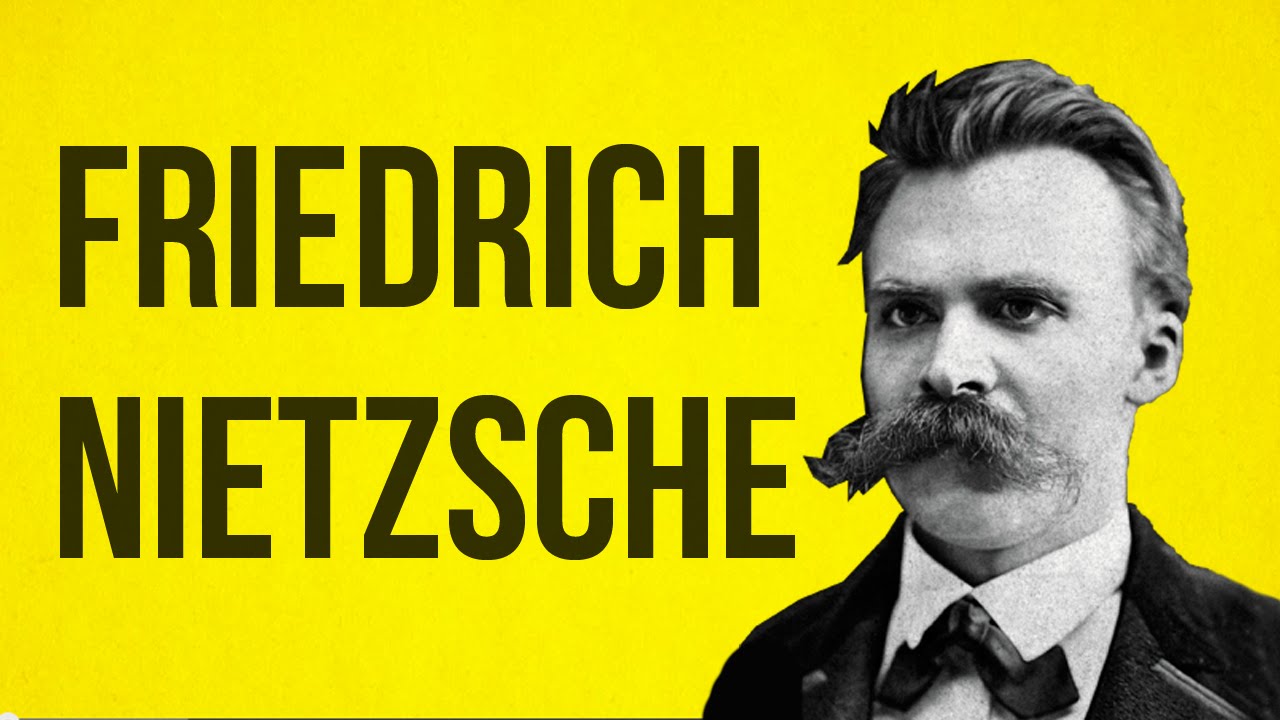
A review of Nietzsche's Genealogy of Morals


In our hypersensitive era, where feelings sometimes impair the ability to read disinterestedly, one wonders how some students are able to read the works of Nietzsche. In the Genealogy of Morals he attempts to trace and assess basic ideas of right and wrong, but in the process attacks the taken for granted assumptions and orthodoxies that characterize the contemporary world: diversity, equality, secularism, religion, science, and much else. I found myself cringing when reading certain passages, even though I am of the generation that, unlike today’s, did not really find things offensive. This emotional reaction was salutary, because it forced me ask why he produced that effect. After some reflection, my tentative conclusions are first, that he forces me (and most readers, I suspect) to face their deepest and unquestioned assumptions about morality and social order, and second, that he does this with an exhilarating style of writing that is rhetorically vertiginous and conceptually effluvial; at times, one has the sensation of spinning in a whirlpool of ideas that are both repulsive and fascinating.

This blog post is animated by the principle that his ideas deserve to be taken seriously despite their repugnance. This means avoiding the common contemporary practice of finding offense when an author expresses things that are shocking or outrageous. It is in this spirit that I will address the following aspects of the Genealogy of Morals: his argument on the origin of our (i.e. Western) morality and its ideological offshoots; his assertions of its emasculating and detrimental impact on society; the style of prose through which his arguments are made; and, lastly, his concluding argument on the difficulty of reconciling romance/family with the vocation of the philosopher/scholar.


Axiom of Evil

As a trained philologist and classicist with an impressive knowledge of ancient and Eastern civilizations, Nietzsche approaches the puzzle of the origin of morality through the identification of the etymological origins of moral language, and via the cross-cultural comparison between contemporary Western Europe and ancient Greek, Roman, and Hindu civilizations. His conclusion is stark: modern Western civilization embodies the triumph of “slave morality”, which replaced—from Nietzsche’s point of view—the far superior “master morality”.

As the above implies, Nietzsche rejected any idea of objective and universal morality, whether the religious kind assumed by monotheism, or the secular versions of the Enlightenment (e.g. Kant’s categorical imperative, or utilitarianism). In fact, he rejects any idea of the existence of some external, objective truth upon which morality must be based. Rather, the essential, defining, and unmistakable feature of all organic life, including humans’, is what he calls the will to power, defined as the natural propensity to exert force, strength, cruelty, and domination. Not all humans have this function, however. It is the purview of what he calls the “master race”, which he defines as the Aryan, blond beasts of prey who conquer, enslave, rape, murder and—get ready for it—enjoy this aspect of their animal, instinctual drives. Those on the receiving end of this ceaseless struggle for conquest and domination, Nietzsche tells us, are the weak, oppressed, swarthy and dark-haired beings who are fated to be slaves (presumably that includes swarthy dark haired Southern Italians like me). It is from this binary opposition that Nietzsche adduces the existence of two moralities—that of the master and the slave. The question about particular epochs and civilizations, then, is which morality reigns supreme.

Antiquity was characterized with, among other things, the master morality, and the language of that period reflects this. In the ancient world, the concepts “Good” and “Bad” did not designate abstract moral principles. Rather, they referred to value judgments of one of the two groups mentioned above. Good meant membership to the natural aristocracy of the master race, while bad meant belonging to the weaker, “inferior” group. Under these conditions, Nietzsche believed, man lived in a halcyon era where excellence, happiness, and strength flourished. It was a time when man was closer to his animal and instinctive nature, and could experience the instinctual joy of conquest, cruelty, and subjection. The strongest elements of the aristocracy could, without moral consideration, indifferent to danger and oblivious to the fear of death, satisfy their lust for war, victory, and enslavement. Here, Nietzsche believed, true greatness could flourish.

But two thousand years ago, the aristocratic and conquering morality of the master race—which, he repeatedly affirms, is organic and natural—was beginning to crumble. That date, not coincidently, coincides with the emergence of Christianity in world history, which Nietzsche blames for the overturning of the master morality and replacing it with the moral system of the oppressed, “inferior” slaves. The culprit was the group from which Jesus arose, namely, the Jews, who successfully and completely overturned the moral system of the conquering Aryans by asserting the moral value of the weak and oppressed. As Nietzsche says:

“It was the Jews who, in opposition to the aristocratic equation (good = aristocratic = beautiful = happy = loved by the gods) ventured, with an awesome consistency, to suggest the contrary equation, and indeed to hold fast to it with the teeth of the most profound hatred born of weakness this contrary equation, namely, ‘the wretched are alone the good; the poor, the weak, the lowly are alone the good; the suffering, the needy, the sick, the loathsome are the only ones who are pious, the only ones who are blessed, salvation is for them alone – but you, on the other hand, you aristocrats, you men of power, you are for all eternity evil, the horrible, the covetous, the insatiate the godless.”

Nietzsche repeatedly reminds us that this moral equation is the metaphysical basis not only of Christianity, but of liberalism, socialism, feminism, and any ideology that includes ideas of justice understood as human equality. 

According to Nietzsche, these ideas of equality and justice, whether religious or secular, have obtained hegemony in the modern world, and this represents nothing less than the triumph and normalization of the slave morality, or the Judeaization of life. One of the ways he represents this development is through the historical struggle between Rome and its Jewish subjects. For Nietzsche, Rome is one of the best expressions of aristocratic, or master, morality: conquering, dominating, enslaving, destroying and creating. It is no coincidence, he tells us, that we are mesmerized by the artistic achievements of the Romans. Their willingness to inflict pain and cruelty, their celebration of strength and superiority, their deification of the animal instincts, were the conditions that allowed greatness to flourish. The Jews, in contrast, were, Nietzsche says, a moralizing and priestly nation obsessed with rules and questions of justice. Unable to defeat the Romans physically, they triumphed over them morally.

Of course this begs the question of how such a feat was achieved. For Nietzsche, there were two conditions that allowed the triumph of the slave morality: commerce and its associated psychological habits, and the priestly members of the aristocracy. Regarding the first, commerce created the distinction between creditor and debtor, as well as the calculation that is an essential aspect of moral conscience. This provided fertile ground for ideas of universal morality. On the latter, all aristocracies have priestly elements who practice and preach asceticism. In the distant past, their functions included mediating and moralizing the relationships between creditors and debtors that were the inevitable result of commerce. Nietzsche argues that Christian theology fit comfortably in this context, since Christians believe that humans were sinners who deserve punishment for the debt they owed to God. But they could not repay, hence the need for a redeemer who loves humans so much that he pays the debt. This redeemer, of course, is Jesus, the God incarnate. If I understand Nietzsche’s argument correctly, it was the priestly class of the Roman aristocracy that successfully brought these Jewish ideas to Rome, and these efforts were successful in part because of the psychological habits (calculation) and categories (creditor-debtor) induced by commercial activity.

This is a complex theory and it is beyond my competence to evaluate it professionally (that is, with the philological and cross-cultural techniques employed by experts like Nietzsche). I can say that it challenges some of the most popular (and perhaps tendentious) explanations of the spread of Christianity. The main puzzle is this: how could the ideas of a Jewish heretic (i.e. Jesus) successfully spread across the Roman world and profoundly change history (which is all the more remarkable when we consider that during antiquity Christianity competed with hundreds of other Eastern belief systems, most of which either went extinct or remained marginal). More common explanations point to its early non-political character, and the successful proselytizing efforts of the early believers, who were willing to die savagely for their beliefs, and who persuaded many marginalized groups, such as women and slaves, to adopt the belief system because it conferred to them a dignity that was absent in the paganism of the ancient world. Nietzsche casts doubt on this and presents a more cynical account of the rise of what he calls the “slave morality” of Christianity. In the process, he forces the reader to think deeper about the puzzle of how this religion succeeded in overturning the preceding moral order.

Nietzsche’s German origins, his incessant assertions on the pernicious influence of Jews, and his celebration of master Aryan races, of violence, conquest, and hierarchy, naturally lead one to question whether his ideas were a precursor to Nazism. It is no coincidence, one might surmise, that Hitler and Goebbels were known to have been thoroughly immersed in the works of Nietzsche. The last’s sister, moreover, was a known Nazi sympathizer who propounded the idea that her brother’s philosophy was in accordance with Hitler’s National Socialism. There are undoubtedly many parallels, especially the emphasis on the superiority of Aryans and their duty to rule, not to mention the attacks on Jews and glorification of war. But I think the evidence is more mixed. Elsewhere in Nietzsche’s writings, such as Beyond Good and Evil, he expresses admiration for the intelligence of Jews and their capacity to have such transformative effects on the course of history. In the Genealogy of Morals, moreover, he recognizes how remarkable it was that a Jewish heresy (i.e. Christianity) was able to conquer and subdue the most powerful empire in history, at least in the realm of ideas and morality. Lastly, my sense is that Nietzsche would reject two cardinal aspects of Nazism, namely, nationalism and socialism. The reason is that both ideologies endorse the equality of members of the nation. Nietzsche would probably say that this is the slave morality but smuggled in through the back door, as it were. He exalts the aristocratic element of nature that divides organic life into predators and prey, strong and weak, or masters and slaves, and I found no evidence that he would somehow accept this division on the basis of that political form we call nation (which, in any event, is a modern invention).

Shocking and Aweing the Reader

The Genealogy of Morals is not a standard scholarly text characterized with dry and measured prose. Rather, it reads almost like a proclamation expressed with the certainty and emotional energy of a prophet or religious fanatic. The copious use of the exclamation mark creates the sensation of agitation and neurotic excitement. In this regard, a typical statement is the following. The strong and the fit need “good air! good air! and away, from any rate, from the madhouses and hospitals of culture! And we therefore want good company, our own company, or solitude, if it must be so! But away, at any rate, from the noxious fumes of internal corruption and the hidden putrefaction of disease!” He is not speaking literally, of course. He is referring to the slave morality which, throughout the text, he repeatedly affirms has poisoned culture. But this way of expressing it discombobulates, startles, and provokes.

There are also turns of phrase that have similar effects. A few examples will illustrate: “to witness suffering does one good, to inflict suffering does one even more good”; “at the time when mankind was not yet ashamed of its cruelty, life in the world was brighter, more cheerful, than it is nowadays, when pessimists abound”; “to speak of intrinsic right and wrong is absolutely nonsensical…life is essentially something which functions by injuring, oppressing, exploiting, and destroying”; the reader has “understood my reasons completely—and I insist that you grasp and understand them thoroughly”[emphasis his].

It seems that, at least in his writing style, humility and modesty were not among Nietzsche’s strong points. This seems to not chime with his discussion of the vocation of the scholar, which I will now address. In the third and final essay of Genealogy of Morals, Nietzsche lays out the conditions which he believes are necessary for scholars to flourish and produce genuinely original thought. First, the scholar must avoid marriage. It is no coincidence, he tells us, that history’s great thinkers—Heraclitus, Plato, Descartes, Spinoza, Kant, Schopenhauer—never married and, as far as we know, avoided romantic entanglements. The reason, Nietzsche says, is that the emotional demands of family and romance compete, and are difficult to reconcile, with the intellectual and emotional commitments that truly great scholarship necessitates. Nietzsche also says that philosophers and scholars must practice poverty and humility and avoid ostentatious things like fame and the company of “princes” (in our own time, elites). Women, sex, money, seeking approval and aiming for material success—all, according to Nietzsche, must be avoided if one wants to pursue a productive scholarly life.

On this he is not completely incorrect. Romantic relationships are indeed emotionally and intellectually demanding: they take time and effort, and this conflicts with the commitments required to teach full time while producing research. This might be less true for, say, the experimental scientist who mainly executes established scientific techniques and presents the results. But for the theorist or philosopher, whose task is to produce genuinely original thought, the demands of romance and family can pose a challenge to the activities necessary to make a significant scholarly contribution: intense, sustained, isolated, and focused reading, and incessant writing, revising, and writing again.

I also think Nietzsche is right that the truly original scholar must avoid seeking ostentatious things, abjure the company of elites, and steer away from fame and other forms of approval-seeking. The works of Nietzsche—which, although repugnant, did significantly contribute to philosophical debate—would not have been possible had he wanted to please anybody. He had to be indifferent to what others, elites or otherwise, thought of him. He was driven, not by the urge for material comfort or acceptance of the powerful, but by the desire to attack the comforting shibboleths of his age. Anything else would have been nothing less than following the herd. This part of the Genealogy of Morals is especially relevant in our social-media narcoticized milieu characterized with stultifying conformity and tribalism that rewards the seeking of approval rather than the challenging of orthodoxy.

Concluding remarks

I leave it to readers to decide whether Nietzsche’s answer to the central puzzle mentioned earlier, namely, how the Jewish heresy of Christianity conquered the earlier pagan order, is convincing. Even if one is not convinced, there is value is posing the question and trying to answer it, because it is hard to deny that Judeaization of the Roman world was a truly remarkable development. I will take a greater liberty in challenging Nietzsche’s normative conclusions of this development. From my perspective, the replacement of the “master morality” was an unalloyed good because, to be frank, that system seems to have been truly awful for anybody who was not a member of the aristocratic class. If Nietzsche were alive, he might say “No! That seems awful only because you are immersed in the slave morality of the West! It’s all a comfortable illusion that denies the liberty of the strong to oppress the weak!” Whereas I might reply that there is nothing necessarily wrong with illusions, especially if they are essential for a decent social order and a dignified life. If a purely naturalist and organic conception of life leads to Nietzsche’s dark conclusions, than to hell it with it. Much preferable is the comfortable illusion of the slave morality, especially for a swarthy dark-haired person like me.