Wednesday, November 9, 2016

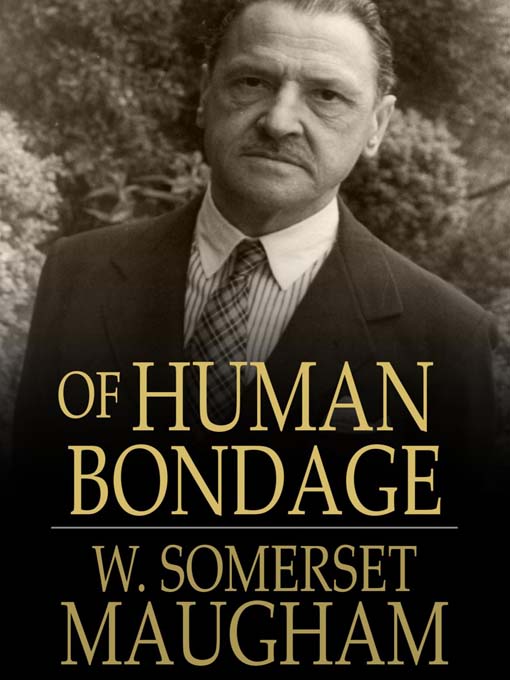
A few thoughts on W. Somerset Maugham's "Of Human Bondage"


With only one exception, all the members of my book-club (myself included) gave W. Somerset Maugham’s novel Of Human Bondage a very high rating, and for good reason. It is not an exaggeration to say that the book is a masterpiece: it conveys a compelling story that evokes powerful emotions, filled with characters and events that are realistic and familiar to most thoughtful readers, and that adds penetrating insight into many aspects of life—from the lofty heights of moral philosophy, to the existential elements of love and loss, to the more mundane and prosaic elements of everyday relationships. My book-club meeting which discussed Of Human Bondage was a good reminder that the text can be interpreted from a number of angles, but here I will focus on one in particular: the significance of the social and cultural institutions and practices that feel oppressive and that make many yearn for freedom, which brings the tendency to idealize circumstances different from one’s own. Once one escapes the various forms of bondage and obtains the desired object, the reality clashes with the ideal, leading to disillusionment and the renewed feeling of being oppressed by circumstances. Philip Carey, the main character of the book, learns this lesson again and again, in particular through his experiences of work and romance. In the process, however, he matures into a talented, thoughtful, caring, and successful person, highlighting that those kinds of travails, and the thrills and sorrows they entail, are an essential aspect of genuine human flourishing.


Philip Carey did not have a very auspicious beginning. Both his parents die young, forcing him to be raised in the home of his aunt and uncle, a childless couple who live in a small town three hours from London. Philip’s uncle, Mister Carey, displays the stereotypically British tendency to be utterly unsentimental and suspicious of emotion, which creates emotional distance between the two. Mister Carey also happens to be a minister in the Unitarian faith (in the early 20th century, Unitarianism was an evangelical form of Christianity, not the secular-liberal belief system it is today). Hence Philip grew up in a fundamentalist protestant household largely devoid of emotion. Meanwhile, Philip has a disabling physical deformity—club foot—that prevents him from excelling in sports, makes him the object of bullying and ridicule, and is psychologically traumatizing.

When Philip discovers literature, he learns that reading is an effective way to escape the distress of his life. Other tendencies also emerge when he becomes a voracious reader, like the idealization of people, places, and things that he does not possess, and the desire to escape the stifling confines of his circumstances. He also becomes academically brilliant, but he rejects the life envisioned by his caregivers of obtaining an Oxford scholarship and becoming a servant of the Church like his uncle. Meanwhile, at 20 years old Philip has his first sexual experience with the much older Miss Wilkinson, who quickly falls in love with him. While he courts her, he idealizes romance, thinking that it would bring genuine joy and happiness. He discovers that those feelings are fleeting. After the consummation, Philip becomes repulsed by her “old” age (40!), and must manage the fall out of her falling in love with him. The frustrations involved motivate Philip to escape to London where can begin his work as an accountant, a profession which promised a comfortable middle class life.

The thrill of being in a big city soon wears off when he experiences a sense of solitude and the frustrations of doing a job he hates. He develops a deep antipathy for his co-workers, and cannot imagine the monotony of being an accountant for the rest of his life. At the same time, Philip romanticizes Paris as the cure to his frustrations, in part because of the scintillating tales of the city heard from Miss Wilkinson, and partly from the French novels he read. Philip therefore makes a leap and moves to Paris to become a painter. In that city he enters the world of Parisian bohemians and intellectuals, and befriends many interesting characters from whom he learns important lessons of life. Perhaps the most important is Fanny Price. Like Philip, she strives to be an artist, and has been attending the painting school for two years. Despite much effort, practice, and determination, she has not developed talent, and refuses when the instructor at the school suggests that she abandon the endeavour. The cost of the school drives her to extreme poverty, and the failure to succeed adds to the misery which becomes unbearable and ends in suicide. From Fanny, Philip learns that success is not a matter of will, determination, or confidence in one’s abilities, and that true talent cannot be taught. Ergo, some are not suited for particular professions, and at times, it may be necessary to accept this brute fact rather than pursue unrealistic dreams. Philip applies this lesson to himself: when the instructor at the school suggests to Philip that he, too, was not meant for the craft, he decides to follow this sage advice and pursues medicine—perhaps not coincidently, the same profession his deceased father practiced.

This takes him back to London, where Philip has the most formative experience in both work and romance. On the former, Philip discovers, beyond a reasonable doubt, that he has the capacities to be an exceptional and outstanding doctor. He possesses those attributes that matter greatly in the profession: the scientific and analytical mindset that is necessary to learn and apply accumulated knowledge to specific cases, and the caring personality that motivates him to help patients even at the lowest rungs of society, and that gives the sick a sense of trust in him. While succeeding at medical school, he meets someone who turns his life around: Mildred, the woman for whom Philip develops a pathological and obsessive love. She does not feel the same, but yet she leads him on. To Philip’s dismay, his rational and analytical mind is no defense against this damaging relationship. He knows she doesn’t love him, and yet hopes that her feelings may change despite all the evidence to the contrary. For her he is willing to spend much of his meagre savings, neglect his studies, and expose himself to harm, while she treats him with contempt and indifference. This destructive relationship reaches a crescendo when Mildred falls in love with Miller, one of her customers at the restaurant where she is employed, and they run away together. One hopes that the sordid affair ends here, but it is only a brief interlude before even greater tragedies occur.

After Mildred leaves, Philip devotes himself to his studies again, and eventually gets over her. Meanwhile, he has another love affair, this time with Norah. Norah and Philip are perfect for each other: like him, she is caring, smart, and supportive. They are friends first, giving them time to know each other, and when the relationship is consummated, it enriches rather than harms the friendship. There is no awkwardness, even in their moments of silence. This seemingly happy picture cracks at the seams when Mildred returns to the scene, and frustratingly (for the reader) Philip decides to break with Norah so he can try again with Mildred, and he does this despite knowing that Mildred is not right for him. This knowledge cannot overcome that dark and mysterious part of him that desires Mildred. Even more puzzling is he recognizes that his desire for Mildred is irrational and portends trouble, and yet Philip is seemingly powerless to do otherwise. The juxtaposition of his relationship with Norah and with Mildred is not coincidental; many readers will be familiar with the tendency to fall in love with the wrong person and to have little or no romantic feelings for the right one.

To no one’s surprise, not even to Philip’s, the relationship with Mildred ends in tears when she runs away with Philip’s best friend Griffin. Philip is driven to intense jealousy and despair to the point of getting thoughts of murder and suicide. The story does not end here. After not seeing her for a long time, Philip encounters Mildred working as a prostitute on the streets of London, living in destitution. He offers to rent her one of the rooms in his apartment. At this point, the reader cannot help but feel a sense of impending doom, but the way it arrives is unexpected. After living together for a while, Mildred decides that she desires Philip, but he does not feel the same namely because of the memories of emotional torture he experienced with her. When he rejects her sexual advances, she loses control and smashes his furniture and apartment and leaves. When he meets her again, she is sick and dying of syphilis (which was lethal in the early 20th century), while working again as a prostitute. He tells her that she is putting her clients at risk, and she replies that “men have not been good to her and so they deserve it”.

That was their last conversation, and Philip’s life moves in a new direction when he meets the family of one his grateful patients, Athenly. The latter is a colorful character who is utterly devoted to and loved by his wife and eight children. During their weekly Sunday dinners, Philip learns about the happiness that family can bring even if it trumps other desirable things, like travelling or a successful career. When Philip loses all his savings from a bad investment, he experiences the homelessness and starvation that many of his patients are familiar with, and must drop out of the final phase of medical school. He is too proud to ask the Athenlys for help, but they offer it and help him get back on his feet. Meanwhile, Sally, Athenly’s oldest daughter, develops an interest in Philip, which is finally consummated in the countryside when the two of them go for a walk. There is a sense of inevitability to their tryst, since the chemistry is mutual, spontaneous, and unforced. At this point, Philip must make a choice between carrying out his plans of travelling the world and practising medicine in exotic places, or settling down with Sally in a small English town where his medical practice will be modest. Philip opts for the latter, and perhaps finds his happiness, but the book ends there, and the reader is left wondering whether his relationship with Sally endures.

Philip’s relationship with Christianity is an essential element of the book and has important implications for moral philosophy. He had a strong religious faith as a child and early adolescent—unsurprisingly in light of his fundamentalist protestant upbringing. Philip’s faith is shattered when God does not answer his prayer to heal his club foot, which did not accord with the biblical passage that genuine faith can move mountains. This clash between Christian ideals and the brute reality of his disability could not be resolved in Philip’s eminently rational mind, and his faith is lost. But although he discards Christian supernatural beliefs, he preserves, or rather continues to practice, Christian virtues of humility, service, modesty, and love for one’s fellows. The conceptual tension is brought to the fore when he meets Cronshaw, a brilliant artist, who reminds Philip that abstract morality, even the supposedly secular kind, is actually the legacy of religion. Once that legacy is discarded, we are left with brute materiality governed by instinct and relations of power. Philip ultimately rejects Cronshaw’s observations, and the problem is never really resolved, although Athenly seems to provide a solution. Like Philip, Athenly is an unbeliever, and yet he raises his eight children in the Christian faith. When Philip asks him how he could impart beliefs to his children that he does not believe in, Athenly’s response is “a man is more likely to be a good man if he learned goodness through the love of God rather than through a perusal of Herbert Spencer”.

The sections on moral philosophy are compelling and important, especially for readers who find these kinds of existential questions interesting. But this aspect of the book is relatively less important than those which delve into the joys and frustrations of work and romance, and in particular the tension between our ideals and reality, and the ways we negotiate and manage the emotions, positive and negative, that are involved in these tensions. This blog post cannot do justice to the intense emotional rawness that suffuse Philip’s experiences in these areas of life. It is clear that W. Somerset Maugham had direct experiences with all the emotions that Philip feels, and was gifted with the capacity to reflect and analyze the deepest and most irrational parts of the human soul.  

Monday, June 27, 2016

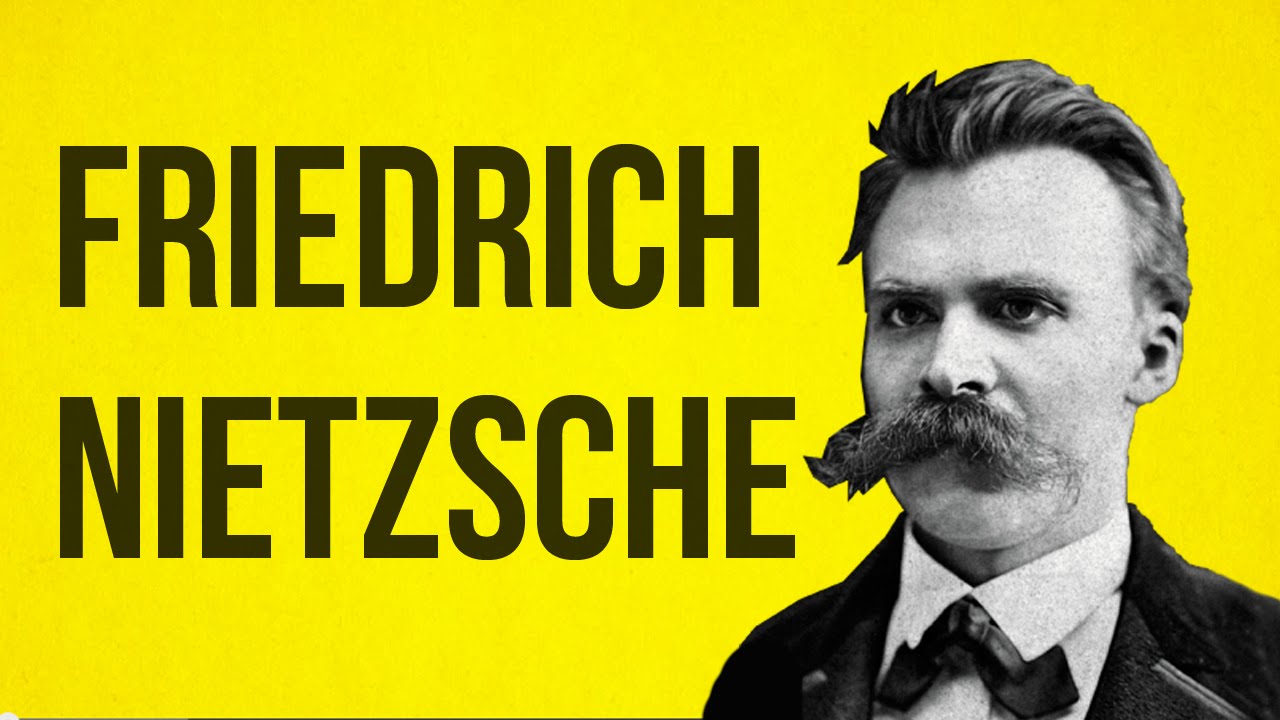
A review of Nietzsche's Genealogy of Morals


In our hypersensitive era, where feelings sometimes impair the ability to read disinterestedly, one wonders how some students are able to read the works of Nietzsche. In the Genealogy of Morals he attempts to trace and assess basic ideas of right and wrong, but in the process attacks the taken for granted assumptions and orthodoxies that characterize the contemporary world: diversity, equality, secularism, religion, science, and much else. I found myself cringing when reading certain passages, even though I am of the generation that, unlike today’s, did not really find things offensive. This emotional reaction was salutary, because it forced me ask why he produced that effect. After some reflection, my tentative conclusions are first, that he forces me (and most readers, I suspect) to face their deepest and unquestioned assumptions about morality and social order, and second, that he does this with an exhilarating style of writing that is rhetorically vertiginous and conceptually effluvial; at times, one has the sensation of spinning in a whirlpool of ideas that are both repulsive and fascinating.

This blog post is animated by the principle that his ideas deserve to be taken seriously despite their repugnance. This means avoiding the common contemporary practice of finding offense when an author expresses things that are shocking or outrageous. It is in this spirit that I will address the following aspects of the Genealogy of Morals: his argument on the origin of our (i.e. Western) morality and its ideological offshoots; his assertions of its emasculating and detrimental impact on society; the style of prose through which his arguments are made; and, lastly, his concluding argument on the difficulty of reconciling romance/family with the vocation of the philosopher/scholar.


Axiom of Evil

As a trained philologist and classicist with an impressive knowledge of ancient and Eastern civilizations, Nietzsche approaches the puzzle of the origin of morality through the identification of the etymological origins of moral language, and via the cross-cultural comparison between contemporary Western Europe and ancient Greek, Roman, and Hindu civilizations. His conclusion is stark: modern Western civilization embodies the triumph of “slave morality”, which replaced—from Nietzsche’s point of view—the far superior “master morality”.

As the above implies, Nietzsche rejected any idea of objective and universal morality, whether the religious kind assumed by monotheism, or the secular versions of the Enlightenment (e.g. Kant’s categorical imperative, or utilitarianism). In fact, he rejects any idea of the existence of some external, objective truth upon which morality must be based. Rather, the essential, defining, and unmistakable feature of all organic life, including humans’, is what he calls the will to power, defined as the natural propensity to exert force, strength, cruelty, and domination. Not all humans have this function, however. It is the purview of what he calls the “master race”, which he defines as the Aryan, blond beasts of prey who conquer, enslave, rape, murder and—get ready for it—enjoy this aspect of their animal, instinctual drives. Those on the receiving end of this ceaseless struggle for conquest and domination, Nietzsche tells us, are the weak, oppressed, swarthy and dark-haired beings who are fated to be slaves (presumably that includes swarthy dark haired Southern Italians like me). It is from this binary opposition that Nietzsche adduces the existence of two moralities—that of the master and the slave. The question about particular epochs and civilizations, then, is which morality reigns supreme.

Antiquity was characterized with, among other things, the master morality, and the language of that period reflects this. In the ancient world, the concepts “Good” and “Bad” did not designate abstract moral principles. Rather, they referred to value judgments of one of the two groups mentioned above. Good meant membership to the natural aristocracy of the master race, while bad meant belonging to the weaker, “inferior” group. Under these conditions, Nietzsche believed, man lived in a halcyon era where excellence, happiness, and strength flourished. It was a time when man was closer to his animal and instinctive nature, and could experience the instinctual joy of conquest, cruelty, and subjection. The strongest elements of the aristocracy could, without moral consideration, indifferent to danger and oblivious to the fear of death, satisfy their lust for war, victory, and enslavement. Here, Nietzsche believed, true greatness could flourish.

But two thousand years ago, the aristocratic and conquering morality of the master race—which, he repeatedly affirms, is organic and natural—was beginning to crumble. That date, not coincidently, coincides with the emergence of Christianity in world history, which Nietzsche blames for the overturning of the master morality and replacing it with the moral system of the oppressed, “inferior” slaves. The culprit was the group from which Jesus arose, namely, the Jews, who successfully and completely overturned the moral system of the conquering Aryans by asserting the moral value of the weak and oppressed. As Nietzsche says:

“It was the Jews who, in opposition to the aristocratic equation (good = aristocratic = beautiful = happy = loved by the gods) ventured, with an awesome consistency, to suggest the contrary equation, and indeed to hold fast to it with the teeth of the most profound hatred born of weakness this contrary equation, namely, ‘the wretched are alone the good; the poor, the weak, the lowly are alone the good; the suffering, the needy, the sick, the loathsome are the only ones who are pious, the only ones who are blessed, salvation is for them alone – but you, on the other hand, you aristocrats, you men of power, you are for all eternity evil, the horrible, the covetous, the insatiate the godless.”

Nietzsche repeatedly reminds us that this moral equation is the metaphysical basis not only of Christianity, but of liberalism, socialism, feminism, and any ideology that includes ideas of justice understood as human equality. 

According to Nietzsche, these ideas of equality and justice, whether religious or secular, have obtained hegemony in the modern world, and this represents nothing less than the triumph and normalization of the slave morality, or the Judeaization of life. One of the ways he represents this development is through the historical struggle between Rome and its Jewish subjects. For Nietzsche, Rome is one of the best expressions of aristocratic, or master, morality: conquering, dominating, enslaving, destroying and creating. It is no coincidence, he tells us, that we are mesmerized by the artistic achievements of the Romans. Their willingness to inflict pain and cruelty, their celebration of strength and superiority, their deification of the animal instincts, were the conditions that allowed greatness to flourish. The Jews, in contrast, were, Nietzsche says, a moralizing and priestly nation obsessed with rules and questions of justice. Unable to defeat the Romans physically, they triumphed over them morally.

Of course this begs the question of how such a feat was achieved. For Nietzsche, there were two conditions that allowed the triumph of the slave morality: commerce and its associated psychological habits, and the priestly members of the aristocracy. Regarding the first, commerce created the distinction between creditor and debtor, as well as the calculation that is an essential aspect of moral conscience. This provided fertile ground for ideas of universal morality. On the latter, all aristocracies have priestly elements who practice and preach asceticism. In the distant past, their functions included mediating and moralizing the relationships between creditors and debtors that were the inevitable result of commerce. Nietzsche argues that Christian theology fit comfortably in this context, since Christians believe that humans were sinners who deserve punishment for the debt they owed to God. But they could not repay, hence the need for a redeemer who loves humans so much that he pays the debt. This redeemer, of course, is Jesus, the God incarnate. If I understand Nietzsche’s argument correctly, it was the priestly class of the Roman aristocracy that successfully brought these Jewish ideas to Rome, and these efforts were successful in part because of the psychological habits (calculation) and categories (creditor-debtor) induced by commercial activity.

This is a complex theory and it is beyond my competence to evaluate it professionally (that is, with the philological and cross-cultural techniques employed by experts like Nietzsche). I can say that it challenges some of the most popular (and perhaps tendentious) explanations of the spread of Christianity. The main puzzle is this: how could the ideas of a Jewish heretic (i.e. Jesus) successfully spread across the Roman world and profoundly change history (which is all the more remarkable when we consider that during antiquity Christianity competed with hundreds of other Eastern belief systems, most of which either went extinct or remained marginal). More common explanations point to its early non-political character, and the successful proselytizing efforts of the early believers, who were willing to die savagely for their beliefs, and who persuaded many marginalized groups, such as women and slaves, to adopt the belief system because it conferred to them a dignity that was absent in the paganism of the ancient world. Nietzsche casts doubt on this and presents a more cynical account of the rise of what he calls the “slave morality” of Christianity. In the process, he forces the reader to think deeper about the puzzle of how this religion succeeded in overturning the preceding moral order.

Nietzsche’s German origins, his incessant assertions on the pernicious influence of Jews, and his celebration of master Aryan races, of violence, conquest, and hierarchy, naturally lead one to question whether his ideas were a precursor to Nazism. It is no coincidence, one might surmise, that Hitler and Goebbels were known to have been thoroughly immersed in the works of Nietzsche. The last’s sister, moreover, was a known Nazi sympathizer who propounded the idea that her brother’s philosophy was in accordance with Hitler’s National Socialism. There are undoubtedly many parallels, especially the emphasis on the superiority of Aryans and their duty to rule, not to mention the attacks on Jews and glorification of war. But I think the evidence is more mixed. Elsewhere in Nietzsche’s writings, such as Beyond Good and Evil, he expresses admiration for the intelligence of Jews and their capacity to have such transformative effects on the course of history. In the Genealogy of Morals, moreover, he recognizes how remarkable it was that a Jewish heresy (i.e. Christianity) was able to conquer and subdue the most powerful empire in history, at least in the realm of ideas and morality. Lastly, my sense is that Nietzsche would reject two cardinal aspects of Nazism, namely, nationalism and socialism. The reason is that both ideologies endorse the equality of members of the nation. Nietzsche would probably say that this is the slave morality but smuggled in through the back door, as it were. He exalts the aristocratic element of nature that divides organic life into predators and prey, strong and weak, or masters and slaves, and I found no evidence that he would somehow accept this division on the basis of that political form we call nation (which, in any event, is a modern invention).

Shocking and Aweing the Reader

The Genealogy of Morals is not a standard scholarly text characterized with dry and measured prose. Rather, it reads almost like a proclamation expressed with the certainty and emotional energy of a prophet or religious fanatic. The copious use of the exclamation mark creates the sensation of agitation and neurotic excitement. In this regard, a typical statement is the following. The strong and the fit need “good air! good air! and away, from any rate, from the madhouses and hospitals of culture! And we therefore want good company, our own company, or solitude, if it must be so! But away, at any rate, from the noxious fumes of internal corruption and the hidden putrefaction of disease!” He is not speaking literally, of course. He is referring to the slave morality which, throughout the text, he repeatedly affirms has poisoned culture. But this way of expressing it discombobulates, startles, and provokes.

There are also turns of phrase that have similar effects. A few examples will illustrate: “to witness suffering does one good, to inflict suffering does one even more good”; “at the time when mankind was not yet ashamed of its cruelty, life in the world was brighter, more cheerful, than it is nowadays, when pessimists abound”; “to speak of intrinsic right and wrong is absolutely nonsensical…life is essentially something which functions by injuring, oppressing, exploiting, and destroying”; the reader has “understood my reasons completely—and I insist that you grasp and understand them thoroughly”[emphasis his].

It seems that, at least in his writing style, humility and modesty were not among Nietzsche’s strong points. This seems to not chime with his discussion of the vocation of the scholar, which I will now address. In the third and final essay of Genealogy of Morals, Nietzsche lays out the conditions which he believes are necessary for scholars to flourish and produce genuinely original thought. First, the scholar must avoid marriage. It is no coincidence, he tells us, that history’s great thinkers—Heraclitus, Plato, Descartes, Spinoza, Kant, Schopenhauer—never married and, as far as we know, avoided romantic entanglements. The reason, Nietzsche says, is that the emotional demands of family and romance compete, and are difficult to reconcile, with the intellectual and emotional commitments that truly great scholarship necessitates. Nietzsche also says that philosophers and scholars must practice poverty and humility and avoid ostentatious things like fame and the company of “princes” (in our own time, elites). Women, sex, money, seeking approval and aiming for material success—all, according to Nietzsche, must be avoided if one wants to pursue a productive scholarly life.

On this he is not completely incorrect. Romantic relationships are indeed emotionally and intellectually demanding: they take time and effort, and this conflicts with the commitments required to teach full time while producing research. This might be less true for, say, the experimental scientist who mainly executes established scientific techniques and presents the results. But for the theorist or philosopher, whose task is to produce genuinely original thought, the demands of romance and family can pose a challenge to the activities necessary to make a significant scholarly contribution: intense, sustained, isolated, and focused reading, and incessant writing, revising, and writing again.

I also think Nietzsche is right that the truly original scholar must avoid seeking ostentatious things, abjure the company of elites, and steer away from fame and other forms of approval-seeking. The works of Nietzsche—which, although repugnant, did significantly contribute to philosophical debate—would not have been possible had he wanted to please anybody. He had to be indifferent to what others, elites or otherwise, thought of him. He was driven, not by the urge for material comfort or acceptance of the powerful, but by the desire to attack the comforting shibboleths of his age. Anything else would have been nothing less than following the herd. This part of the Genealogy of Morals is especially relevant in our social-media narcoticized milieu characterized with stultifying conformity and tribalism that rewards the seeking of approval rather than the challenging of orthodoxy.

Concluding remarks

I leave it to readers to decide whether Nietzsche’s answer to the central puzzle mentioned earlier, namely, how the Jewish heresy of Christianity conquered the earlier pagan order, is convincing. Even if one is not convinced, there is value is posing the question and trying to answer it, because it is hard to deny that Judeaization of the Roman world was a truly remarkable development. I will take a greater liberty in challenging Nietzsche’s normative conclusions of this development. From my perspective, the replacement of the “master morality” was an unalloyed good because, to be frank, that system seems to have been truly awful for anybody who was not a member of the aristocratic class. If Nietzsche were alive, he might say “No! That seems awful only because you are immersed in the slave morality of the West! It’s all a comfortable illusion that denies the liberty of the strong to oppress the weak!” Whereas I might reply that there is nothing necessarily wrong with illusions, especially if they are essential for a decent social order and a dignified life. If a purely naturalist and organic conception of life leads to Nietzsche’s dark conclusions, than to hell it with it. Much preferable is the comfortable illusion of the slave morality, especially for a swarthy dark-haired person like me.

Friday, May 6, 2016

The Radical Politics at the Heart of Herman Melville's "Moby Dick"


Herman Melville’s Moby Dick is superficially a story about the perils and adventures of whaling. On this plane of the book, animal lovers would probably find the scenes of hunting and slaughtering whales to be gruesome and unpalatable, while others who are more carnivorous will vicariously experience the excitement of the chase. But there are other layers of meaning that arguably are more important and without which the book would never have become a classic. One is the political content; sometimes explicitly and other times below the surface, Moby Dick is a treatise on Melville’s radical democratic and subversive politics. There are also insights on the nature of power and leadership. As will be argued below, Moby Dick highlights how these things cannot be exercised with force alone. Intangibles like courage, knowledge, and character matter just as much if not more. Finally, like all great books, Moby Dick illuminates some of the universal and general aspects of the human condition: the ways we try to escape from pain, loss, and frustration.


Herman Melville was an American North Easterner, abolitionist, and devout Unitarian writing in the early/mid-19th century, when the new American Republic was experiencing dramatic political convulsions over slavery which would culminate in the civil war. The language of Moby Dick in many ways reflects its time; it is common to refer to those of non-European stock as “savage” or “barbaric” or even “pagan”. But this crude terminology is overshadowed by the radical equality that lies at the heart of the book, which, for an early and mid-19th century audience, was probably subversive. Although on land, slavery and other injustices reigned supreme, on the Pequod (the name of the whaling ship) we see something very different: whites, blacks, aboriginals, and disabled working together, mostly cooperatively, towards their common goal of capturing whales. On the ship, their ostensibly irreducible differences are subsumed under the shared experience of living in close quarters for multi-year voyages on the sea.

The diversity and equality on the Pequod is clearly an expression of Melville's ideal society. In Moby Dick, the philosophical basis of this kind of politics is ultimately religious or, more specifically, Protestant. In one scene, the main narrator soliloquizes the following

By this august dignity I treat of, is not the dignity of kings and robes….thou shall see [dignity] in the arm that wields a pick or drives a spike; that democratic dignity which, on all hands, radiates without end from God Himself! The great God absolute. The centre and circumference of all democracy! His omnipresence, our divine equality!

This sentiment suffuses the book throughout and explains some specific aspects of the story, like the valorization of Queequeg and Pip, even though the former is aboriginal and the latter is of African-origin. Queequeg is clearly the hero of the story, demonstrating virtues such as perspicacity, intuition, strength, magnanimity, and courage. Pip, meanwhile, is the most intelligent crewman. Here, Melville was not so subtly telling his slave-owning readers that persons of African descent were not stupid as the commonly-held stereotypes assumed. They were often brighter and more talented than whites. This gave them a humanity that was hard to square the institution of slavery. The tendency to valorize non-whites is, throughout the text, not coincidently accompanied by the denigration of what Melville calls the “conceits” and “hypocrisies” of Christendom (as the West was then called). Here, Melville was attacking the presumed superiority of his readers, many of whom were probably slave owning whites who believed they were true Christians.

Back to Queequeg, who, as well as being the hero, is the most interesting character of the book. When Ishmael initially encounters him in Nantucket (the island in Massachusetts from which whalers departed), his initial reaction is fear and disgust. Queequeg is full of tattoos and is known by locals to be a cannibal. Ishmael is forced to sleep in the same bed as Queequeg one night because the only room available at the inn was a shared accommodation with a single bed, and the alternative was sleeping outside in the freezing cold of Nantucket’s winter. Here we begin to see some of the most remarkable and, from Ishmael’s perspective, transformational scenes. As Ishmael waits in the room, full of terror and trepidation because of who he must share a bed with, Queequeg comes in and silently engages in some of his “pagan” rituals, such as taking Yogo, a statue of his deity, out of a bag and performing rituals with it. Queequeg and Ishmael share a few words, and after his initial alarm the latter begins to feel at ease, saying the “man’s a human being just as I am…better to sleep with a sober cannibal than a drunken Christian”. He falls asleep and rests peacefully, and wakes up with Queequeg hugging him in an affectionate but completely non-sexual manner. From here, they develop an unbreakable bond that ties them together throughout the whaling voyage.

Ishmael and Queequeg eventually join the crew of the Pequod, which is commanded by the monomaniac and one-legged Ahab. He has a life-time of experience as a whaler and lost his leg while trying to hunt Moby Dick, the fierce and redoubtable albino sperm whale that becomes the object of Ahab’s obsession. Vengeance must be obtained for the infliction of this unfixable and debilitating injury, and Ahab offers a large sum of money to whoever of his men helps capture that hated whale. His power on the Pequod is almost absolute, and this tyranny is perhaps in tension with the radical equality that elsewhere suffuses the story. But Ahab’s leadership also reveals how power is effectively exercised. Although he possesses muskets and other instruments of violence that allow him to impose his will, these things form only a small part of his leadership. The possession of a forceful and confident personality that exudes authority matter more. Also important are his forty years of experience of being an audacious and fearless whaler, which has provided valuable knowledge of the sea and its perils. It is these intangible traits that explain the crew’s obeisance to Ahab’s authority. They feel, according to Melville, a “mystical and sympathetic” connection with Ahab that binds crew and commander together in a way that gives him the power to shape the destiny of all.

Ahab’s mission to find and destroy Moby Dick becomes the possession of everyone else’s even though it was not in the crew’s material interest to capture the dreaded whale. Strictly speaking, the crew’s interest is to capture “normal” sperm whales so that they can profit from the whale oil which, in the mid-19th century, was the energy used to power lamps. But Ahab’s obsessive desire for revenge becomes theirs. There are exceptions; one of the crew members, Stubb, realizes the suicidal folly of Ahab’s mission and, at a certain point, contemplates killing him. From a utilitarian perspective, this action arguably would have been just because, by killing Ahab, the entire crew would have been saved. But it was not to be, and the hunt for Moby Dick ends in tragedy for all. The final scene is a dramatic and cosmic struggle between Moby Dick and Ahab. The latter ultimately obtains his objective of striking a fatal blow, but before Moby Dick dies, he delivers a devastating attack to the Pequod’s hull, which sinks in the middle of the Pacific and kills the entire crew, including, sadly, Queequeg. At this point, I was hoping that he would somehow save the day and prevent the disaster ultimately caused by Ahab’s madness. In the end he goes down with the ship, but he indirectly produces one final act of goodness: a coffin built for Queequeg (he almost died of illness during the voyage) becomes a life-boat that is used by Ishmael, the only survivor who lives to tell the story.

The whaling voyage can also be read as an expression of the condition of man who lives in a world full of injustice, pain, and sorrow, and how people find ways of dealing with these things. Most aim to be as comfortable as possible by accumulating material possessions and establishing the security and luxury of family and community. A special minority deal with life’s frustrations by embarking on risky and high-stakes adventures. Moby Dick clearly conveys contempt for the former and celebrates those who willingly pursue the latter. The whaling voyage itself is the embodiment of this attitude. Most of the crew are persons who have experienced some sort of personal pain rooted in a socially unjust system, unfortunate circumstances, or a combination of both. They reject the temptation to find comfort on land and decide to sail around the world in search of the profits that accrue from harvesting the highly valuable whale oil, but the hunt is not reducible to pecuniary considerations. It includes the excitement of encountering far-off civilizations in Latin America, Africa, and Asia, and entails an almost mystical union with nature that appreciates its beauty and transcendence even while recognizing the savagery that characterizes the natural world.

A 19th century whaling voyage that lasted three or four years would be mostly alien to the contemporary mind—characterized as it is by a hyperconnectivity, constant distraction, and the endless pursuit of social comfort and material satisfaction. During such a voyage, one would be completely isolated from home and mostly focused on the hunt, exposed to the dangers of the sea and elements with no way of calling for help in the event of an emergency. Such an adventure required the cultivation of virtues like courage, collaboration, tenacity, creativity, and the myriad skills upon which success and even survival depended. This collaborative effort, moreover, would trump any racial, national, religious, or other group categories that elsewhere would define and orient social action, all while providing a sense of vulnerability, danger, excitement, and adventure that would dissipate life’s mostly petty frustrations.

Sunday, December 20, 2015

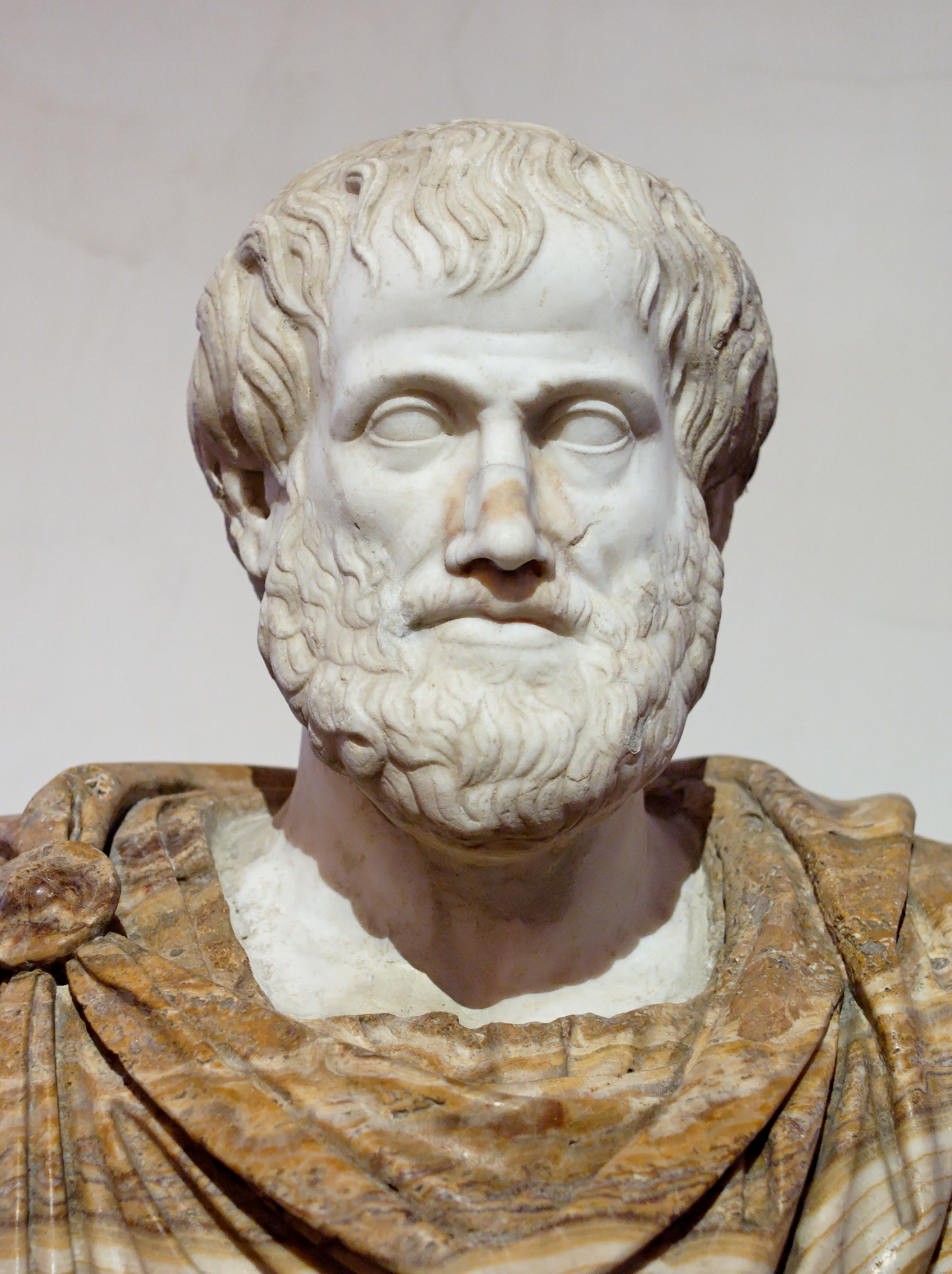
Aristotle, Rationality, and Emotion

I am currently working on a paper that explores the relationship between international politics and the emotions. This entails the difficult task of bridging two forms of social inquiry, scientific and subjective, each of which corresponds to different spheres of human activity. Scientific observations capture that which can be directly quantified and measured, like a state’s territory, population, and economy, while subjective ones aim to shed light on the amorphous realm of feeling, thinking, and perception. Examining the former usually means collecting and statistically comparing hard data. The latter is trickier but ultimately more intellectually rewarding because it includes the analysis of many kinds of texts, such as novels, media sources, and other platforms where humans communicate with one another.

A deep thinker

A research project of this character requires a demanding review of literature in order to identify whether, and how, one might make an original contribution. The literature that I must explore for this purpose runs the gamut from the classics of the ancient world to the latest research on neuroscience, and in this blog post I will share some of observations made while reading Aristotle’s Nicomachean Ethics and Rhetoric. As the titles of those works suggest, Aristotle thought that the study of emotion was central to understanding ethical behaviour as well as the rhetorical flair necessary for public speaking. Some of his insights deserve to be mentioned and analyzed.

Unsurprisingly, he believed that emotions were opposed to, or logically independent from, rationality. Here we find the origin of much enlightenment thought which venerated reason because alternative forms of understanding, such as intuition, mysticism, and the emotions, were deemed to be backwards or superstitious. This mindset found expression in most Western social scientific scholarship of the 20th century, and especially the discipline of economics, which pre-supposed rational agents in its models of human behaviour. Liberalism and realism, the dominant paradigms in my discipline (international relations), also assumed this highly stylized depiction of human behaviour. Of course, many economists and others now recognize what those in other disciplines, such as anthropology and sociology, have long known, namely, that human action is much, much messier than the rational actor model implies. Humans are subject to a range of influences when they make decisions, especially emotions, some of which arguably lead to more optimal outcomes than was previously believed. 
  
 In the contemporary debate among theorists of politics and emotions, one of the divides is between those who argue that emotions are primarily embodied, involuntary, evolutionary adaptations, and those who assert that emotions flow from cognitive appraisals (cognitivists). A core feature of this dispute is the temporal sequence of emotions and cognition: one camp assumes that the emotions precede thought and narration, while cognitivists assume the reverse. Nicomachean Ethics and Rhetoric show that this sets up a false dichotomy, since the proper answer to the debate is that both are right depending on the context and the emotions. Aristotle believed that some emotions, like anger and fear, are largely involuntary. Others, like envy and indignation, are the result of specific forms social comparisons and hence arguably voluntary. In this latter kind, Aristotle makes genuinely insightful observations that have stood the test of time. Emotions occur because humans have goals, and in the attainment of them we compare ourselves with others who have similar objectives. What is more, we compare ourselves mainly with those who are like us rather than with those who are not; when those in our own group category are doing much better or much worse than us, it evokes emotion.

It seems this goes some way in explaining the fact that the anger that people feel towards intra-group inequality is greater than the satisfaction that they feel for inter-group equality. For example, one of the trends in our own time is that inequality has increased domestically, while it has decreased internationally, largely because of the same macro-structural process of globalization. And yet the same actors who quickly condemn globalization for increasing inequality domestically are less likely to praise it for reducing inequality between the West and, say, India and China. Why? I think Aristotle’s observation above answers that question. Those in the domestic realm share a legal, territorial, linguistic, and national orientation, while the almost 1 billion Indians and Chinese who have escaped poverty in the past 25 years are, for most citizens, abstractions. A similar dynamic happens when there is an accident or other event that causes death. When a plane crashes that is full of citizens from our country, we feel it, while the same plane full of foreigners does not evoke the same emotions. Not all are this parochial, of course, but even if half or most are, it supports Aristotle’s theory and goes some way in shedding light on why people react emotionally to some and not others.

Scholars tend to divide emotions into positive and negative, the former usually referring to things like joy, pride, and love, the latter to anger, hatred, and fear. This taxonomy perhaps reflects the scientific impulse to categorize and simplify, which makes research projects more manageable. Aristotle’s work suggests that emotions are not that simple. One of the more interesting parts of his theory is the proposition that negative emotions are often pleasurable, raising questions about how negative they actually are. The pleasurable part of anger, for example, is revenge, while the pleasurable part of sadness is lamentation. My interpretation of these examples is that emotions have social functions or outcomes, and it is this element that produces pleasure. This is another insight that has stood the test of time. Self-righteous indignation, the kind that characterizes much debate during elections, can be pleasurable precisely because it has a social purpose, namely, the political goals of the actor. Here, negative emotions can be understood as part of the action that is necessary to attain these goals, which involves engagement with others: solidarity with those who one agrees with, and antipathy towards those on the other side. One is reminded of other activities that bring men pleasure, such as organized sports and other forms of controlled conflict. Aristotle was clearly on to something here.     
            
Although Aristotle mostly thought that emotions were irrational, he recognized that understanding them was useful for effective public speaking. That was certainly his purpose in Rhetoric, where he spends much more space theorizing emotions than in Nicomachean Ethics. In the process, he made genuinely insightful observations that remain relevant 24 centuries after he wrote. One overarching lesson is that emotions are messy and are not easily quantified. This should council humility to those in my discipline who aim to be rigorously scientific. The methods of modern science include concepts that are categorized into highly stylistic, distinct, and simplified units that can be directly statistically represented and measured. This process is essential for the next step of theory building and hypothesis testing, both of which are characterized with a clear demarcation between variables, as well as an unambiguous separation between independent (cause) variables and dependent (effect) ones. This mode of inquiry might work well in some forms of psychological testing and neuroscientific analysis, but it insufficient for a comprehensive study of emotions because, as Aristotle shows: 1) emotions are not necessarily distinct; they are composite and overlapping, 2) they depend on context, character, and type such that it makes little sense to ask what “causes” emotions. Rather, they have a variety of causes that depend on a variety of influences and on the type of emotions we are investigating. This implies that strictly scientific methods are inadequate for the study of emotion, and that other sources are needed to help us illuminate them.